Phylogenomics of weevils (Coleoptera: Curculionidae)
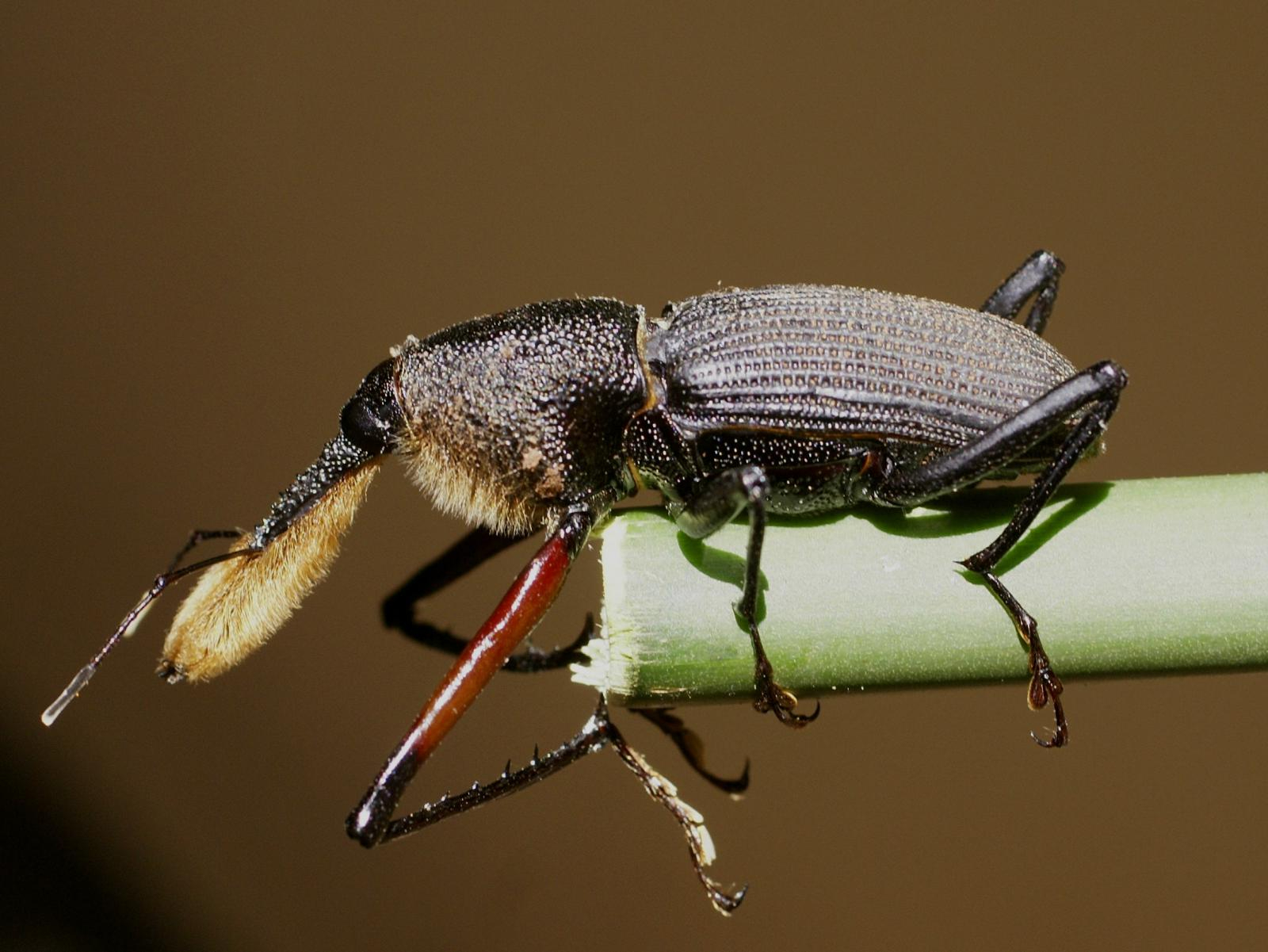
Curculionidae, commonly known as weevils, represent one of the most diverse groups in the tree of life, with over 60,000 described species. The vast majority of weevils are phytophagous, and their incredible diversity is deeply intertwined with the evolutionary history of flowering plants. This intricate relationship has driven remarkable patterns of morphological and behavioral evolution that lie at the core of my research interests. I am using anchored hybrid enrichment (AHE) sequencing to generate high-resolution genomic data and reconstruct the higher-level phylogeny of two subfamilies of weevils: Dryophthorinae, largely specialized on monocots, and Cossoninae, notable for their diverse habitats, broad host-plant associations, and unusual behaviors such as parental care and harem polygyny.
Supported by the Negaunee Integrative Research Center, the Grainger Bioinformatics Center, and the 1K Weevils Project Consortium.